Blog

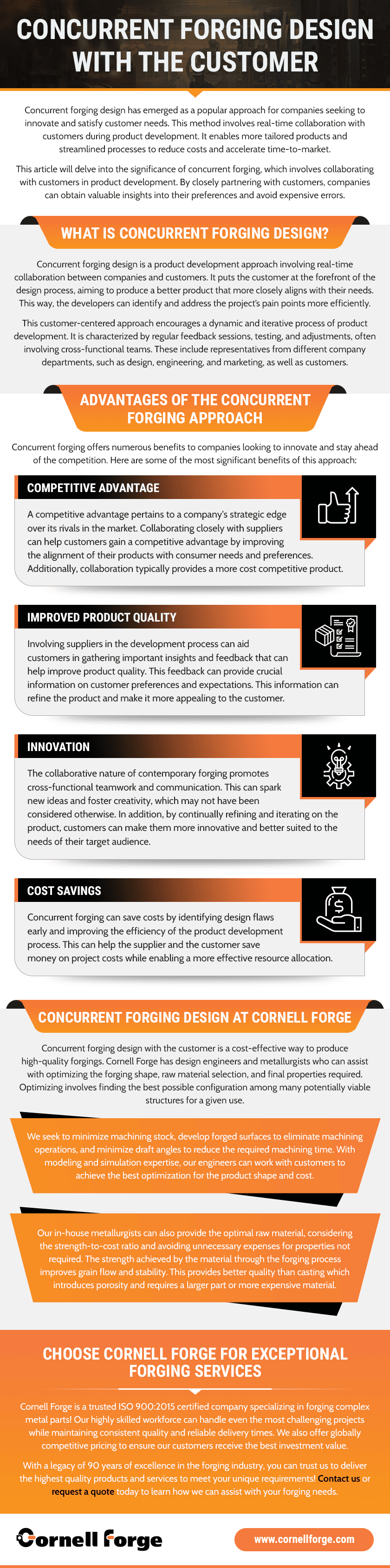
Concurrent Forging Design With the Customer

Click to Expand Concurrent forging design has emerged as a popular approach for companies seeking to innovate and satisfy customer needs. This method involves real-time collaboration with customers during product development. It enables more tailored products and streamlined processes to reduce...


Key Considerations in Closed Die Forging

Closed die forging is a forming process that uses specialized tools called dies to shape metal into the desired form. This technique has many advantages over other metal forming methods, including increased strength and precision of the finished product. Thus, it is widely utilized in the automotive, aerospace, and energy...


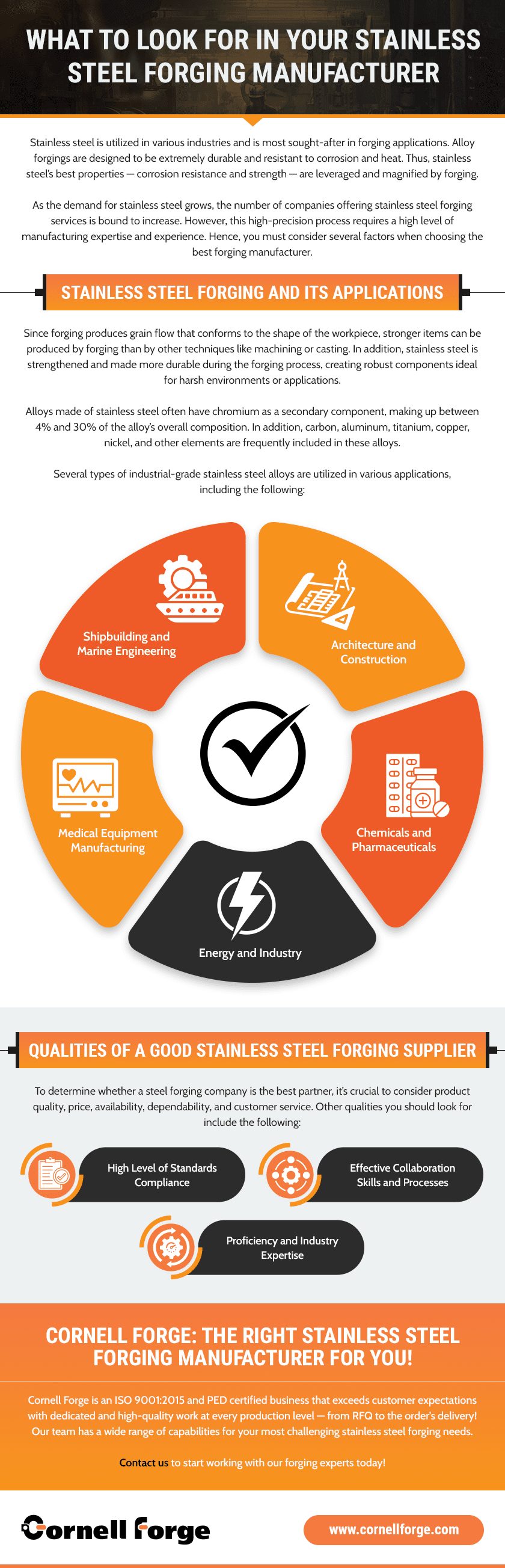
What To Look For in Your Stainless Steel Forging Manufacturer

Click to Expand Stainless steel is utilized in various industries and is most sought-after in forging applications. Alloy forgings are designed to be extremely durable and resistant to corrosion and heat. Thus, stainless steel's best properties — corrosion resistance and strength...


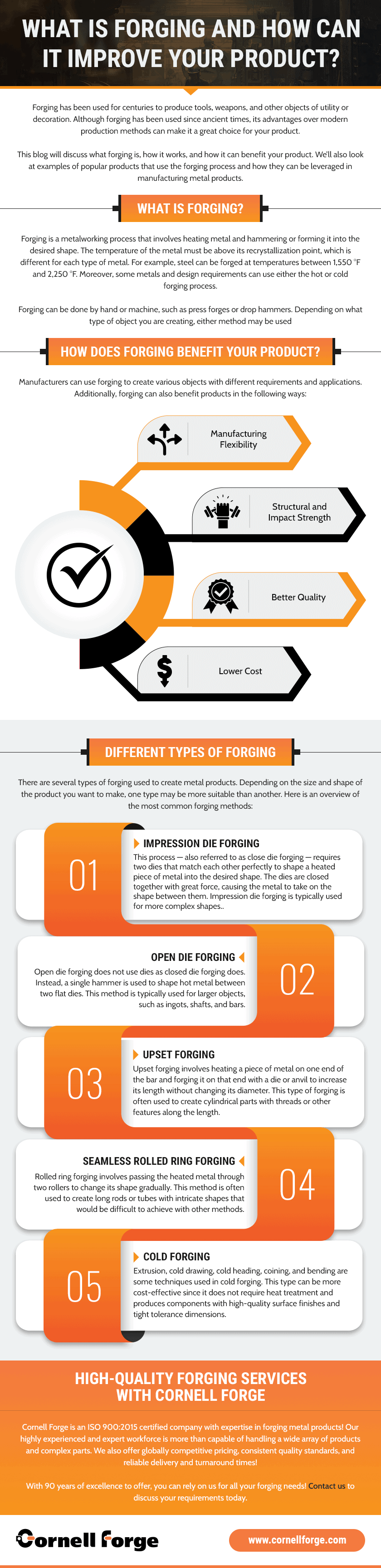
What Is Forging and How Can It Improve Your Product?

Click to Expand Forging has been used for centuries to produce tools, weapons, and other objects of utility or decoration. Although forging has been used since ancient times, its advantages over modern production methods can make it a great choice for...


forging equipment

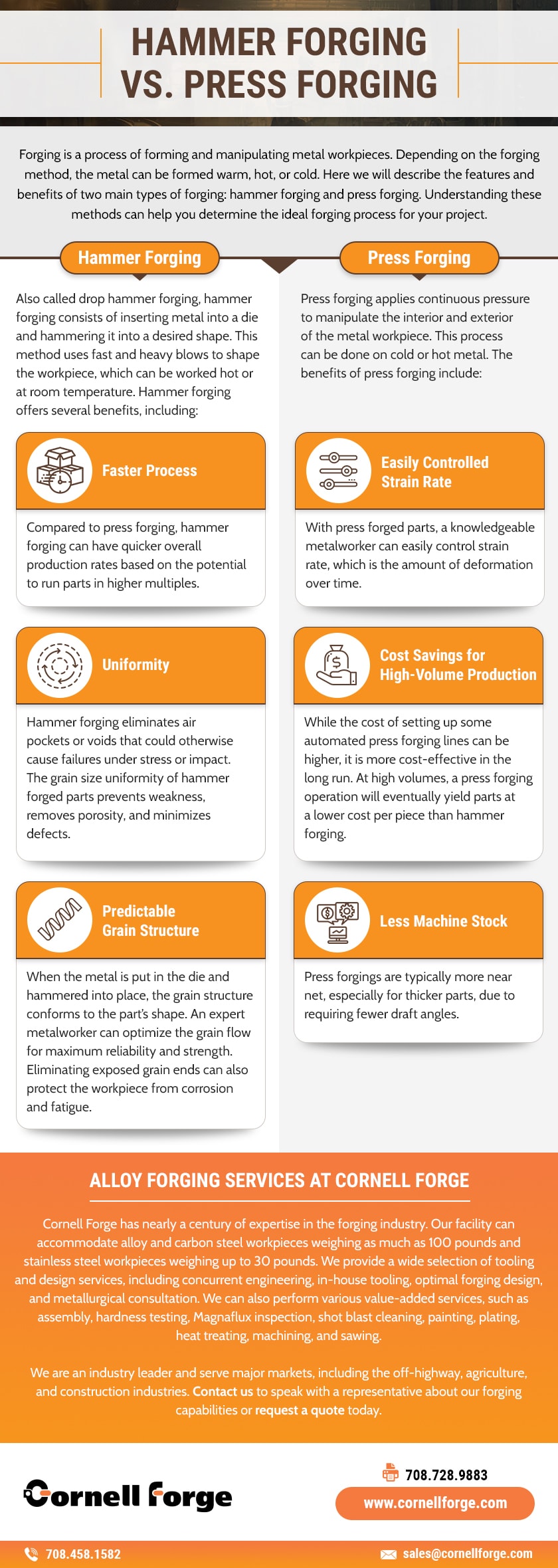
Hammer Forging vs. Press Forging

Click to Expand Forging is a process of forming and manipulating metal workpieces. Depending on the forging method, the metal can be formed warm, hot, or cold. Here we will describe the features and benefits of two main types of forging:...


Handshake

Forged vs. Cast – What’s the Difference?

Cornell Forge is an ISO 9001:2015-certified company that specializes in forging design, tooling, and metal forging services to create custom-engineered products and parts. We offer a diverse array of metal forging capabilities, including closed die hot forging, as well as finishing and value-added services that simplify your supply chain. Our...


Typical Metals Used For Forging

Simple and complex metal parts are found in various industries around the globe. From complex aerospace assemblies to simple garden tools used to beautify our lawns, numerous metal products are created using a metal forging process that makes the materials strong and durable enough for the task at hand. Typical metals...


hot forging

Differences Between Hot and Cold Forging Processes

Forging changes a metal workpiece through compression at either cold, warm, or hot temperatures. Cold forging improves the strength of the metal by hardening it at room temperature. Hot forging results in optimal yield strength, low hardness, and high ductility by hardening the metal at extremely high temperatures. Whether to...


Build to Last

Custom Forgings
For Your Toughest Jobs

Contact Us

Address

  • 6666 W. 66th Street
  • Chicago, IL
  • 60638

E-mail Address

Phone Number

Fax

  • (708) 728-9883

Send Us a Message

  • This field is for validation purposes and should be left unchanged.