
Supply chains rely on predictability. For procurement managers and engineering leads sourcing steel forgings, that predictability just experienced a fundamental shift.
On April 2, 2026, a new Presidential Proclamation under Section 232 of the Trade Expansion Act was signed, taking effect on April 6. Titled "Strengthening Actions Taken to Adjust Imports of Aluminum, Steel, and Copper Into the United States," this policy restructure significantly impacts the cost of importing steel articles.
For U.S. manufacturers, defense contractors, and industrial OEMs who rely on imported closed-die steel forgings, the cost equation has permanently changed.
What the New Tariff Structure Means for Procurement
Section 232 has been in place since 2018, but the April 2026 update closes long-standing loopholes that foreign manufacturers previously used to artificially lower the effective tariff burden on imported goods
The single most critical change is how the tariff is calculated. Tariffs on imported steel products are now applied to the full customs value of the product, rather than just the declared raw metal content.
Under the new law, closed-die steel forgings—classified under HTS code 7326.19.00 (Iron or steel, articles forged or stamped but not further worked)—fall directly into Annex I-A. This places imported forgings in the highest tier of the new framework, carrying a 50% tariff on the full customs value.
For buyers currently relying on overseas supply chains, this means a foreign part that competes directly with a domestic forging now faces a 50% tariff on its entire value before it ever reaches the United States. The pricing gap between foreign and domestic forgings has narrowed materially, making domestic sourcing not just a logistical advantage, but a financial necessity.
The Value of a 95-Year Domestic Foundation
This policy update underscores a reality that the Administration has explicitly framed as a national security interest: the United States needs a robust, self-reliant domestic manufacturing base.
At Cornell Forge Company, this isn't a new initiative. It is exactly what we have been doing since 1930.
We are a 100% family-owned, independent forging operation based in Chicago, Illinois. For 95 years, we have produced closed-die steel forgings exclusively, serving the defense, industrial, energy, and heavy transportation sectors.
When you source from Cornell Forge, you are not simply avoiding complex international tariffs—you are securing a predictable, high-quality supply chain.
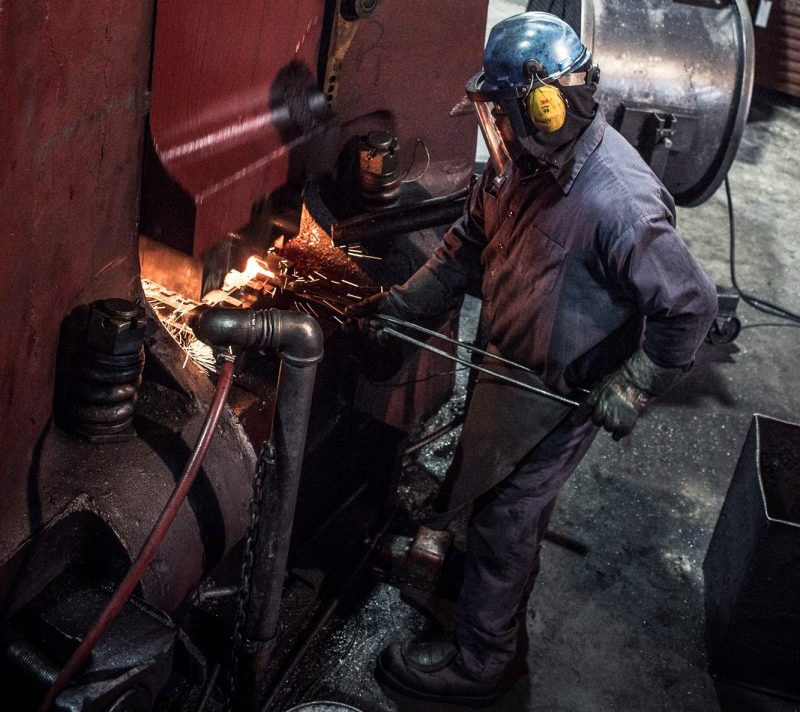
- 100% Domestic Steel: We do not import steel. We purchase Special Bar Quality (SBQ) carbon alloy and stainless steel exclusively from U.S. mills.
- Heavy Manufacturing Capabilities: Our facility is equipped with a range of hammers and presses, capable of producing forgings up to 4,000 tons of press force. Read More
Defense & Industrial Ready: We produce forgings for critical U.S. military applications and industrial OEMs, directly contributing to a secure domestic supply chain. Read More
Let the Work Speak for Itself
Cornell Forge is a proud member of the FIGHT Coalition — a group of domestic forging manufacturers working directly with the U.S. Commerce Department and the White House to combat unfair foreign trade practices and strengthen protections for the American forging industry. We don't chase manufacturing trends or rely on marketing gimmicks. We are a serious, hardworking manufacturing business that makes steel forgings right here in Chicago, and we are very good at it.
If the recent changes to Section 232 have complicated your sourcing strategy, it is time to evaluate a reliable domestic alternative. The landscape of imported forgings has changed, but our commitment to quality, American-made manufacturing has remained exactly the same for nearly a century.
Ready to secure your supply chain? Contact our team today to discuss your closed-die forging requirements or to request a quote. Request A Quote